
Madison County Multi-Day Arrest Reports
Madison County has no sheriff-published 72-hour report. There is no weekly blotter either. No historical arrest log appears on the sheriff's site. The working substitute is the Madison County Inmate Inquiry, a portal built around booking dates. Enter a Booking From Date and a Booking To Date. The system returns every matching custody record in that window. It works like a database range query, not a written arrest summary. It is also not a fixed seven-day publication. A range search shines when the booking date is fuzzy or an intake crossed midnight. It can even surface rows that linger after a person leaves custody. One caution applies: the portal publishes no archive depth, no page-rollover rule, and no update schedule. Results can shift from one visit to the next.
Read Madison County Booking Ranges
Work in short spans. Pick a start date, then move backward a few days at a time. Narrow windows make duplicates and repeat bookings far easier to sort out. And never assume the first results page holds everything. The interface can page or cap what it shows.
- Open the official inquiry and enter the beginning date under Booking From Date.
- Enter the end date under Booking To Date, using Madison County local dates.
- Leave In Custody broad when looking for people who may have been released during the range.
- Use an exact name, subject number, or booking number to inspect a particular event.
- Record the search date and time, then verify charges and outcomes through the court record.
Only care about today? The Arrested Today page covers the tighter intake-lag approach. For multi-day searches, write down your start and end dates. Counts can move as Madison County adds, corrects, or removes booking data, so those notes anchor what you actually searched.
Madison Arrest Log Entry Fields
The portal's list fields cover identity and custody status, not case outcomes. Charges, bond, arresting agency, court dates, and release reasons appear only inconsistently. Some may not appear at all. The detail record may add some of it. For the rest, turn to the creating agency or the Madison County court file.
| Entry element | Meaning and limit |
|---|---|
| Name and subject number | Identity and portal reference fields used to distinguish or connect records. |
| Booking number | A reference to one intake event, useful in a focused records request. |
| In Custody | Status when the database was queried, not a historical release narrative. |
| Scheduled release date | A planned date that may change because of court action, holds, or transfer. |
| Photo column | A booking image may appear, but the county promises neither universal display nor retention. |
| Physical descriptors | Details that can help distinguish similar names without resolving a case. |
| Multiple bookings | A portal indicator, not proof of convictions or repeated criminal conduct. |
A portal label is only a starting point. Match the booking to its court case. The clerk's disposition, never the portal wording, is what truly describes the outcome of the matter.
Weekend Arrest Posting Is Unstated
Madison County publishes no weekend arrest schedule. There is no posted holiday delay, nightly cutoff, or weekday catch-up either. Claiming a Monday search always holds a weekend backlog would be pure guesswork. The smarter habit is simple. Search the arrest date you know. Widen it by one day on each side when the results look thin, and re-run the query later if the booking is fresh.
Timing explains part of the puzzle. An arresting officer creates the record first. Jail staff then identify the person, assign booking data, and finish the intake steps. The portal displays whatever its jail management system has released, and those steps need not share one timestamp or any published average delay.
A missing roster row can mean several things. Someone cited by an officer, released by a magistrate, transferred out, or never actually booked into Madison County Jail can all stay off the list, so confirm through the sheriff or the arresting town department.
The Madison County press-release index works differently. Its dated announcements cover selected county events, which makes it a supplement rather than a complete weekend arrest log.
Madison Arrest Records Beyond the Portal
How far the inquiry reaches back is unstated. The county does not publish it. North Carolina's approved sheriff records schedule governs record series. It works as a management framework, though, rather than a web-display calendar. Some nonmedical incarceration records may be destroyed three years after release or transfer, subject to holds and local administration. A standalone arrest report never filed with a case can qualify for destruction five years after arrest, while case files follow their own schedule.
Those periods authorize destruction under stated conditions. They do not guarantee that a portal row stays visible for three or five years. Nor is destruction required on day one. Litigation, an audit, local policy, or a different classification can preserve a record, and criminal-history records with mug shots and fingerprints answer to another rule.
The North Carolina State Archives local-government page details the framework.
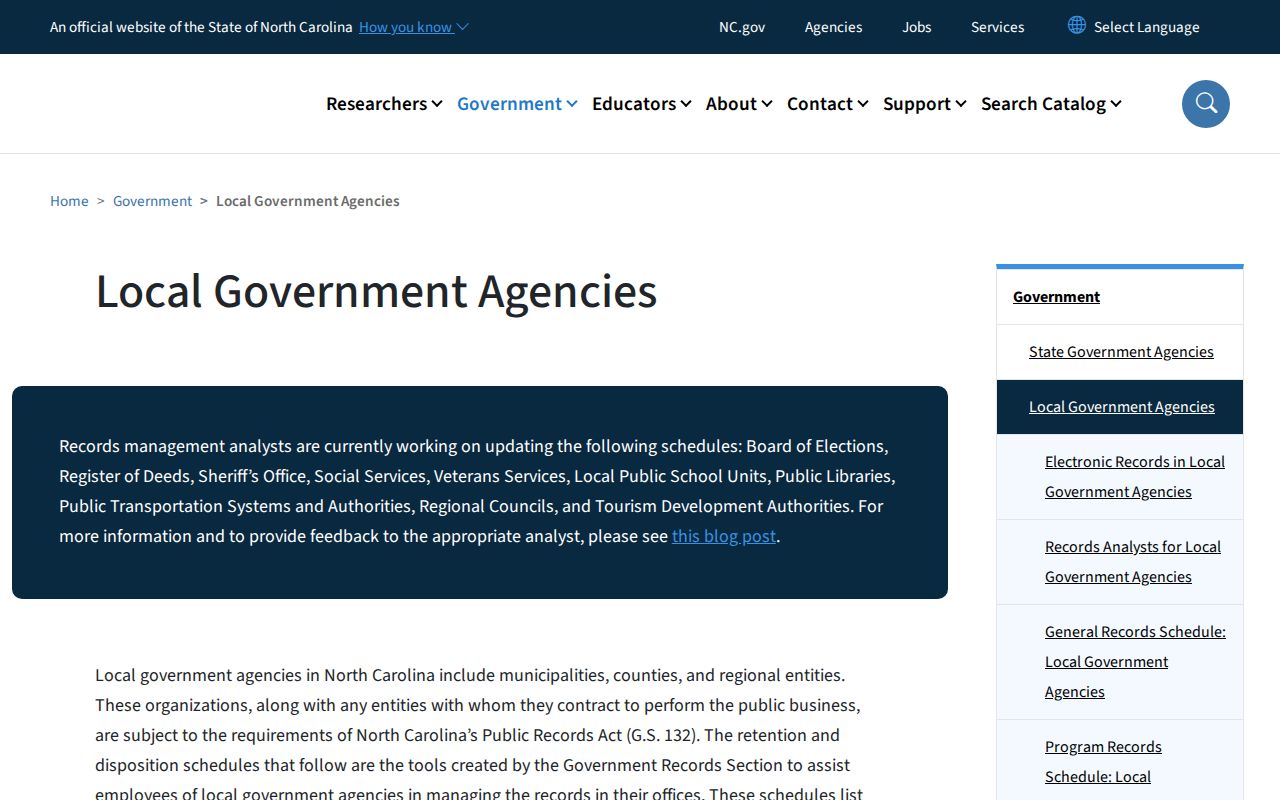
Archive guidance covers custody and retention, not the live portal's online roll-off.
For a modern record past the visible range, start with a written request to the sheriff. State the name, date range, agency, and record series. Then check eCourts. The Madison County Clerk comes next. Those two hold the case and its disposition. Prison, probation, and parole follow a different route. The North Carolina Department of Adult Correction offender search is the custody source for those moves, while historical newspapers and archival collections are later steps rather than substitutes for a current jail record.
Note: Expunction can change access under a court order, but it is distinct from ordinary retention and does not prove a private copy was corrected.
Madison Arrest News Is Selective
Arrest coverage in the Madison County area runs on events, not on a set schedule. A single WNC Times piece may pull together four agencies. It draws on the sheriff, Mars Hill Police, Marshall Police, and the SBI. That is what regional reporting does well. A story on a Marshall warrant service works the same way. It folds in statements from each agency involved. What these pieces will never give you is a list of every person booked in Madison County on a given day. Nobody writes one that way. The WNC Times operation report shows the pattern in a single story.
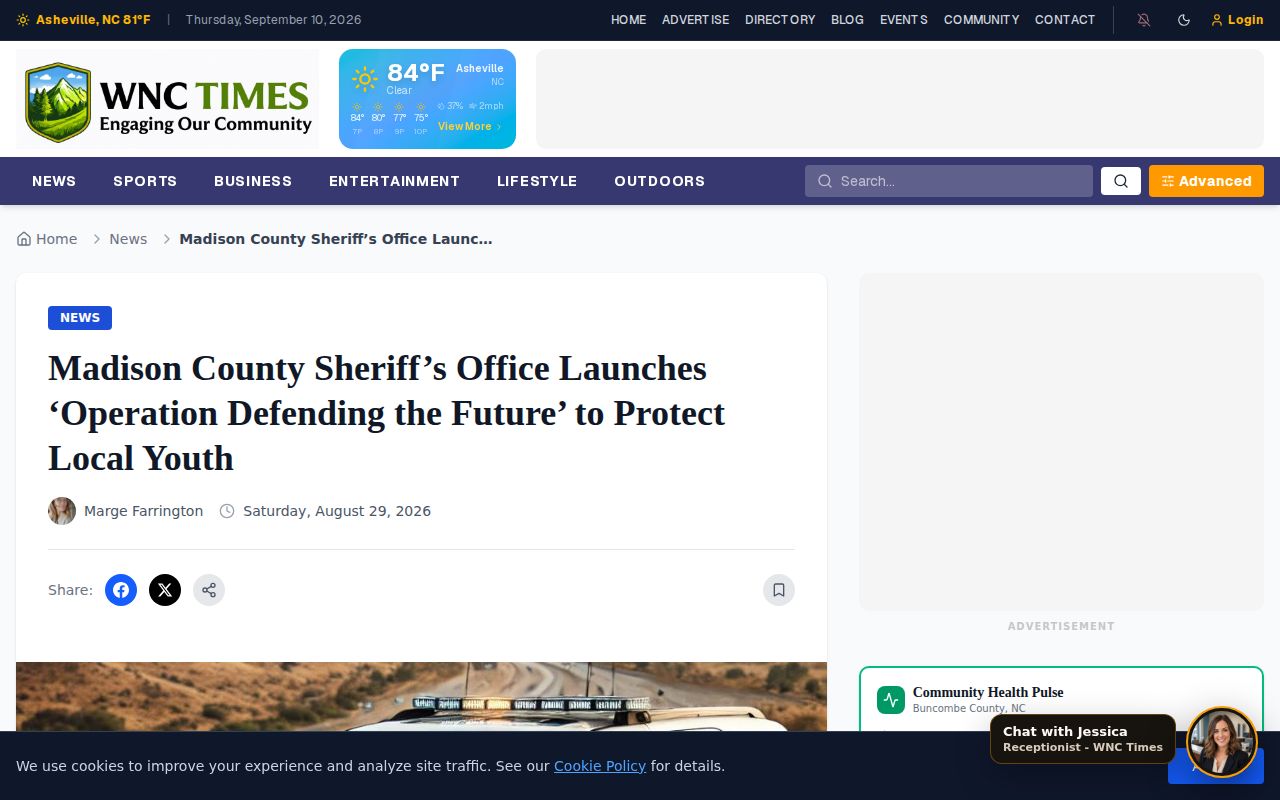
Newspapers work the same beat. The News-Record and Sentinel is reachable through the county resident portal, and DigitalNC keeps the paper's older issues on file. Neither offers a running public arrest blotter. Today the paper runs no complete booking list. County press releases pick and choose, too. A booking can happen in Madison County with no story written about it, and a name that does make the news only tells you an arrest occurred.
Unofficial Madison Booking Archives
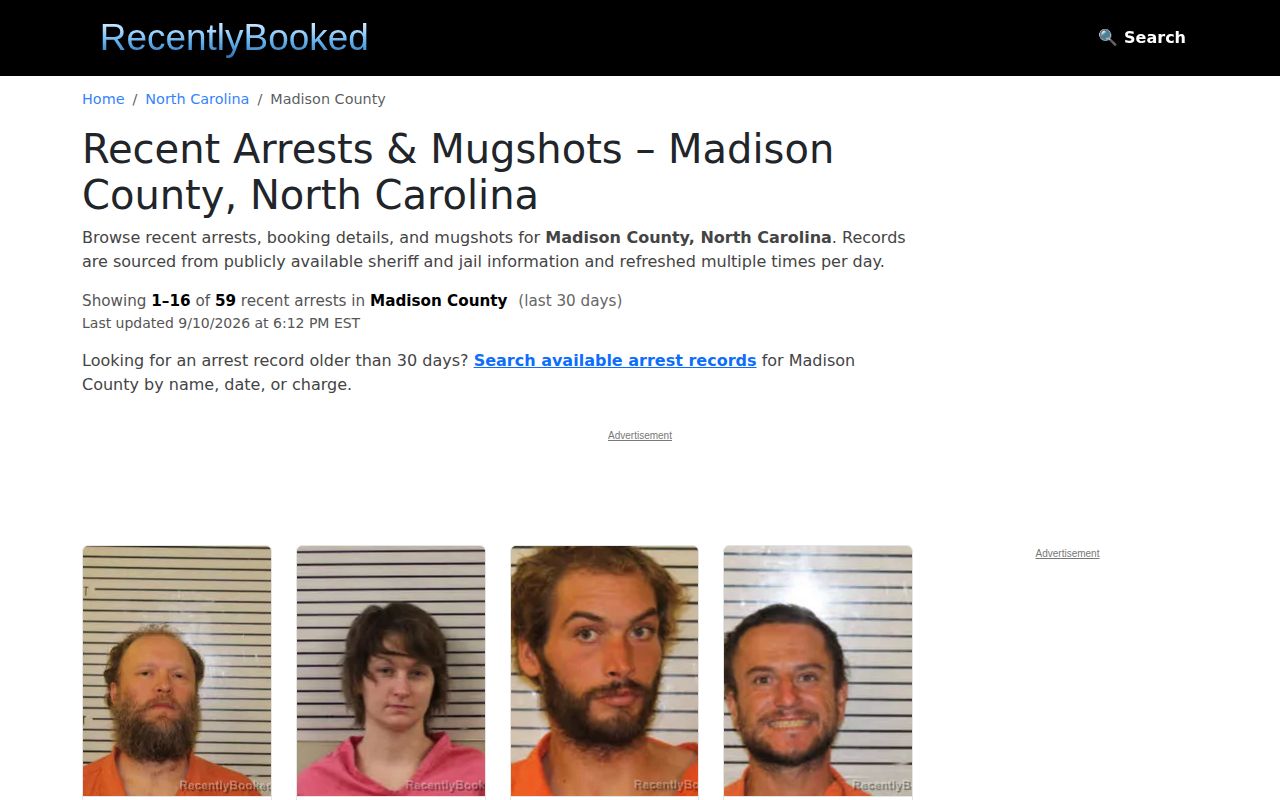
Once the official routes are exhausted, unofficial archives are the next stop. RecentlyBooked keeps a rolling 30-day window and says the page refreshes several times a day. Busted Newspaper paginates its county archive of booking photos. Mugshots.com lets you filter by county and year. None of them holds the actual Madison County records. Their update habits say nothing about how fast the sheriff portal refreshes. Treat every entry as a lead. Copies can be stale, incomplete, or tied to the wrong person. A private page won't show a release, a dismissal, an expunction, or a corrected agency record. Check the booking number and date. Match them against the official inquiry and the court file. Arrests.org and Mugshots.zone list no Madison County, North Carolina section. Skip any guessed page addresses. The RecentlyBooked Madison page is a clear example of the unofficial multi-day format.
These archives answer one question only: who might have been arrested. The arrest report belongs to a single agency. It goes to whoever made the arrest. Jail intake records sit with the sheriff. A charge's final outcome lives elsewhere. It sits in the clerk's court file. Point each request at the office that owns the record. That is what turns a scattered search into a clean one.